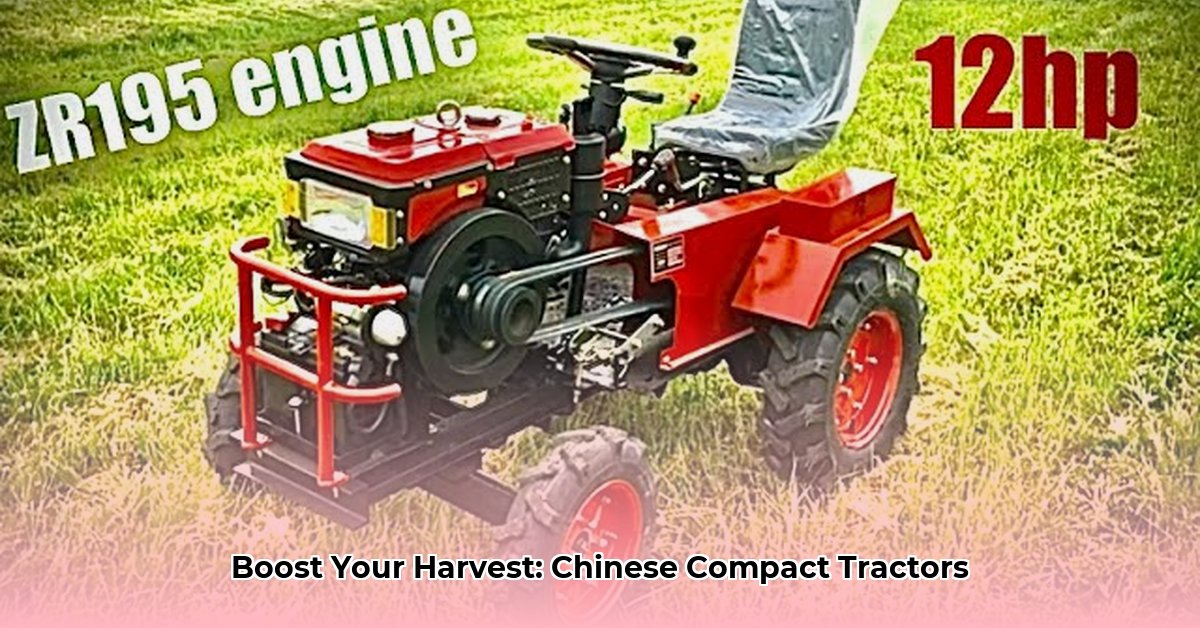
Chinese Compact Tractors: A Small Investment, a Big Impact on Global Agriculture
Small-scale farming often faces limitations due to access to resources and equipment. The emergence of Chinese compact tractors presents a compelling solution, offering affordability and efficiency for boosting farm productivity. But is this a simple solution, or are there complexities to consider? This article explores the potential, challenges, and long-term sustainability of this burgeoning market. For more information on small tracked tractors, check out this helpful resource: small tracked tractors.
The Allure of Affordability: A Game Changer for Smallholder Farmers
The most immediate benefit of Chinese compact tractors is their price point. Significantly cheaper than Western counterparts, they unlock mechanization for small and medium-sized farms, especially in developing nations with limited budgets. This accessibility opens opportunities for sustainable farming practices previously out of reach. Lower costs enable increased efficiency and potentially higher crop yields. However, focusing solely on initial cost risks overlooking long-term considerations. The “cheapest” solution isn’t always the most sustainable.
Do you ponder whether the long-term savings offset the initial lower investment? The answer is critical for sustainable farming growth.
Beyond Basic Tillage: Versatility for Diverse Operations
These tractors are more than just tilling machines. Many models come with diverse attachments, transforming them into multi-purpose tools capable of plowing, sowing, harvesting, and transporting goods. This versatility is particularly valuable for farms with diverse operations. However, the longevity, availability, and replacement cost of these attachments need careful consideration. Their adaptability proves beneficial but requires further examination.
A key question: How does the versatility of attachments compare against the long-term cost of maintenance and replacements?
Durability and Lifespan: A Long-Term Investment Perspective
While attractive due to their lower initial purchase price, the long-term durability of Chinese compact tractors remains a pressing issue. Reliable data comparing the lifespans of different brands is lacking. This knowledge gap hinders farmers' ability to make sound, long-term investments. To address this, independent testing and standardized evaluation are crucial for providing farmers with clear insights into expected lifespan. A focus on established brands with robust after-sales support is generally advisable.
How can we ensure the development of consistent standards for measuring and reporting tractor lifespan and durability? This question underpins responsible decision-making among smallholder farmers.
Environmental Impact: Sustainability Beyond Fuel Efficiency
Fuel efficiency stands as a significant advantage. These tractors often consume less fuel than larger models, leading to lower running costs. However, this is only part of the sustainability equation. The manufacturing processes, materials used, and eventual disposal also impact the environment. Manufacturers are stepping up their sustainability efforts, including the use of eco-friendly materials and sustainable manufacturing practices. Yet, much greater effort is needed to minimize the environmental footprint of these tractors throughout their entire life cycle. This includes rigorous research into sustainable disposal methods.
What innovative technologies can minimize the environmental impact across the tractor's entire life cycle, from manufacturing to disposal? Addressing this forms a vital component of truly sustainable agriculture.
Support and Maintenance: Essential for Uninterrupted Farming
Reliable after-sales service and readily available spare parts are paramount, especially in rural areas where access to repair services can be limited. A strong dealer network and easy access to replacement parts are essential for minimizing downtime. Prior to purchase, farmers must carefully investigate the availability of service and parts.
The Future of Farming: Technology Integration
The integration of precision farming technologies into these tractors is gaining momentum. GPS, sensors, and automated systems can significantly boost efficiency and reduce environmental impact. However, widespread adoption remains a hurdle due to cost and the availability of farmer training. Research into making such advanced technologies more accessible and affordable is crucial.
How can we make advanced precision farming technologies more accessible, cost-effective, and user-friendly for smallholder farmers? The answer will accelerate the adoption of sustainable farming practices.
Actionable Steps: A Collaborative Approach to Sustainable Farming
Achieving sustainable use requires collaboration among various stakeholders:
Key Takeaways:
- Chinese compact tractors offer diverse options balancing affordability, durability, and technological advancements.
- Understanding brand-specific differences is crucial for making a sustainable investment.
- Long-term sustainability goes beyond the initial purchase price.
- Thorough research and careful consideration of individual needs are paramount.
- Assessing long-term costs, parts availability, and technological capabilities is key.